When it comes to beverages, 2015 was all about craft. In 2016, it’s going a step further to in-house distillation, plus culinary and cocktails will find more common ground, and whisky will longer hold the spirit crown.
1. Nitro Coffee
Coffee’s next iteration, nitro coffee—a cold brew that’s been injected with nitrogen, improving the mouthfeel and drinkability of cold coffee—is being incorporated into alcoholic and non-alcoholic coffee drinks. Nitro tap systems are available for restaurants and coffee shops. The coffee bar at Beatrix from Lettuce Entertain You serves up Caramel Cream Nitro, made with cold brew nitro, house-made caramel, whipped cream and sugar (yum).
2. Creative Gin Drinks
Bartenders are getting creative with classic gin-based drinks—martinis and gin and tonics—using gins aged in whiskey, brandy or rum barrels and infused with the tastes of botanicals or sweetened with hints of vanilla, maple or brown sugar.
3. Locally Produced Beer/Wine/Spirits
A recent trend has emerged of restaurants showcasing beverages produced either in-store or locally. One such example is Denver’s Mile High Spirits, a private label micro-distillery, cocktail lounge and tasting room. The emphasis on locally-produced drinks aims to promote and publicize the efforts of lesser-known breweries and vineyards while offering a unique, home-grown pairing with local food.
4. On-Site Barrel-Aged Spirits
Aging cocktails and spirits in barrels can add a new level of flavor to your drink and soften the harshness of alcohol. Recently, restaurants and bars have been buying their own barrels to age their cocktails/spirits in the store. This is the case at local Denver restaurant La Loma where they age their whiskey in an oak barrel for a few months before serving.
5. Culinary Cocktails
Culinary Cocktails is about looking forward. Many of today’s great chefs are pushing the envelope of cuisine by using fresh ingredients and modern techniques to create attractive, delicious, and stunningly innovative drinks. It doesn’t just stop at chefs though as at-home mixologists are moving this trend into the everyday.
6. Regional Signature Cocktails
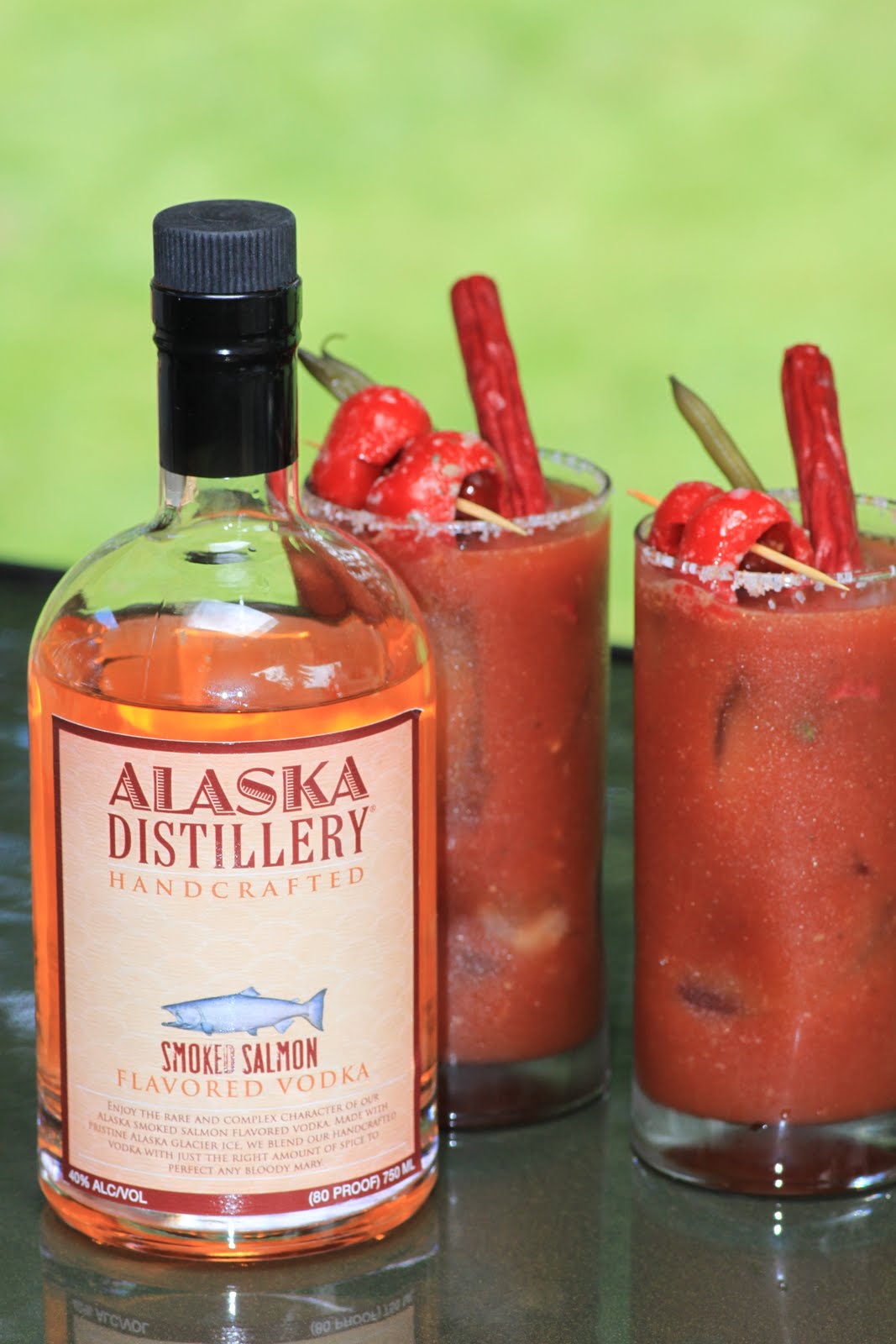
The trend of localism is spreading throughout the United States and the same rings true for the restaurant industry. Although you may not know it, most states have their own signature cocktail, typically catering to their specific food profiles. For instance, the Smoked Salmon Bloody Mary uses local Alaska Distillery’s smoked-salmon vodka, highlighting the state’s uniqueness and love for salmon. Regional cocktails add a whole new approach to dining and drinking around the U.S.
7. Shrubs and the Tart Cocktail
When it comes to flavor, fermented foods have been a hit with diners in 2015. From kimchi to the at-home pickling phenomenon, tart flavors have found fans in adventurous and health-conscious eaters. As culinary cocktails become more prevalent (see above), look for this food trend to extend to cocktails in the form of shrubs in 2016. What’s a shrub? It’s a colonial American method of using vinegar to preserve fruit. and will be applied to cocktails as a new way to mix tart drinks. Shrubs fit all the criteria for a trend-worthy concoction: bold flavor, house-made, and reflects the desire for our vices to become a bit healthier.
8. Tap Takeover in Restaurants
Restaurants are becoming more innovative and focused on their beverage programs as a whole, including cocktails. As popularity and familiarity with pre-batch cocktails grow, look for these batches to leap from the bottle to the tap. Restaurants will begin to offer more cocktails on tap to better suit their service demands. On tap cocktails will be especially efficient for restaurants as they begin to sell more complex drinks because timing is so important in a restaurant.
10. Rum Cocktails and Sipping Rums
Tiki bars have brought rum back to the mainstream. They’ve helped elevate rum cocktails from the purgatory of vacation indulgence or captain-and-coke puerility and shown just how varied cocktails made with the sugar cane spirit can be. As the taste for regional flavors grows, look to see rum on the rise. Rum should undergo a similar arc as whiskey did during its (continuing) boom which means we’ll soon see bar patrons began ordering the spirit neat.
Controlling food costs is integral to running a profitable restaurant. At its heart lies the challenge of balancing the (rather) static cost of the item displayed on the menu with the daily variations in cost for its ingredients. To ensure this, restaurant operators and managers must think of food cost as a performance metric; by comparing actual food costs to theoretical costs over time, restaurants can maintain profitability.
Food Costs As A Performance Metric
To gauge how well a restaurant is managing its food costs, you must first understand what a restaurant’s Theoretical Food Costs are, based on current inventory costs of all ingredients for the meals sold, and assuming perfect portions, no breakage and no shrinkage. Once the restaurant’s Theoretical Food Cost is known, you can then compare it to their Actual Food Cost, which is simply the actual cost of all the food that the restaurant used for a given period.
The difference between the two is the true measure of efficiency in food cost control; it’s called the Actual vs. Theoretical Variance and reducing it to its lowest possible point is the goal.
How To Calculate Theoretical Food Costs
Theoretical Food Cost is what your food cost should be in an ideal world with perfect portions and no breakage, waste, or shrinkage reported as a percentage of Total Food Sales. To calculate it, you need the following information:
Food Cost for each menu item, calculated with a very accurate tally of the quantity and cost of each ingredient that goes into each menu item, including any ‘paper costs’ such as napkins, wrappers, and bags.
Units Sold for the period for each item, which should be easily exportable from your Point of Sale system.
Total Food Sales for the period, in dollars.
Theoretical Food Cost (%) =
[ ( item A Food Cost × item A Units Sold ) + ( item B Food Cost × item B Units Sold ) + ..] / Total Food Sales × 100
Because each restaurant has so many items sold and so many ingredients for each item, this is a very difficult calculation to do manually. If your sales data is synced with your inventory system, this is likely a report that can be run with no manual intervention. Ideally it is run every time you calculate your Actual Food Cost.
How To Calculate Actual Food Costs
Actual Food Cost, also reported as a percentage of total sales, is a measure of how much your food cost truly is. It’s a straight-forward calculation, but it relies on taking careful and regular inventory counts. The formula for Actual Food Cost requires the following information:
Beginning inventory, or the total cost of inventory at the beginning of the period. It’s important to note that if the cost of something has changed, it’s best practice to use the most recent unit cost.
New inventory purchased, or the total cost of inventory purchased throughout the period.
Ending inventory, or the total cost of inventory left unused at the end of the period.
Total Food Sales for the period, in dollars.
Actual Food Cost (%) =
[ ( Beginning Inventory + New Inventory Purchased ) – Ending Inventory ] / Total Food Sales × 100
How To Calculate Actual vs. Theoretical Variance
This is the measure of efficiency in controlling food costs; the result tells you how closely the restaurant’s Actual Food Cost was to their Theoretical Food Cost.
Actual vs. Theoretical Variance =
Actual Food Cost – Theoretical Food Cost
Although Theoretical and Actual Food Costs will never match, meaning your variance will never be 0, what you are looking for are trends when the divergence is increasing or when there are sudden changes. These changes are a signal to investigate the cause of the discrepancy.
The most common cause of increased variance (and higher than desired food costs) is inaccurate inventory. To reduce error, follow inventory management best practices. Another possibility is that you are wasting a lot of food. This may be due to inefficient portioning, spoilage, employee theft or error. The other, much more concerning, possibility is that the cost of what you are selling is out of line with what you are charging. Most often, this is because prices on the menu have not been updated to reflect increasing food costs.
As a manager, in a restaurant or otherwise, it is your responsibility to ensure that business is running smoothly. This ranges from how staff is performing to business outcomes. It can be a heavy load. However, there are still many easy and inexpensive things you can do to make sure your establishment is running the way it should and to prevent problems before they occur.
Get involved
No one thinks of the phrase “absentee boss” in a positive context. Being in the establishment is a good start, but you need to get out of your office and on the floor and in the kitchen.
Be seen.
Even if the general manager and/or owner are not, you can be. In fact, putting in the effort to be available to your staff and customers will help you in the end. Employees will respect you all the more, making your job that much easier.
Drop in unexpectedly
When I was working in the industry, my manager would pop in and out all the time. She would tell us that she had an appointment the next morning and was coming in late, then show up early and say that the appointment was rescheduled. After I moved on, she let me in on her little secret and explained that it was her way of keeping everyone on top of their game. And it worked.
The first few times you do this though, it may catch a few off guard. Give them some slack the first few times, but if they don’t shape up, you’ll know and can then do something about it.
Stop by after hours
You know those restaurant ‘spy’ shows where they go undercover to find out who’s behind the business’s shortages? Well, one of the recurring things on those programs is that abuses are happening after hours; bartenders are throwing parties, chefs are using your place for a pop-up restaurant, etc. Well, even though those shows are overdramatized, they’re not off the ball.
To ensure this is not happening at your business, especially if you’ve noticed something suspicious, go in when the place is closed, and do it often. For many restaurants, a drive by will suffice. No lights on and no parked cars are both good signs when the place is supposed to be closed. A similar tactic is to check with your alarm company to see when the alarm was turned on and turned off.
Hire an experienced person for the role of mystery shopper
Again, those ‘spy’ tv shows are on to something here.Using a mystery shopper can help uncover that which you would not discover otherwise. This can be anything from poor service and inconsistencies in food/beverages to comps, and more.
It’s best if your mystery shopper is experienced in restaurant and hospitality operations and someone you’re familiar with, but you’re employees are not.
Also, having your mystery shopper visit regularly will allow him or her to form relationships with your staff, increasing access to what’s going on behind the scenes.
Do an accurate inventory, and do it often
Whether you’re responsible for both food and beverages, or just one or the other, don’t just do an inventory on one time of item or before placing weekly orders. If possible, aim to do a thorough inventory 2-3 times per week. While inventory should always be done when the business is closed, don’t do it on the same days every week.
This is a lot to take on, but there are tools that can help. It’ll be worth it in the end; you’ll not only be protecting the business from unnecessary spending but also ensuring that business operations are running as they should.
Rotate staff between units and shifts
The more comfortable staff is with each other the more likely they will get together to do things that should not be done. This is a tough tightrope to walk.
You need to have people together enough that they work smoothly with each other, but not consistent enough to become overly friendly.
The side benefit of this is that everyone starts knowing how to work with everyone else, which is a plus if you have to switch around people for special events, staffing shortages, etc.
The bottom line is that there are several small steps that you can take to tighten up business operations and ensure that everything is being run as it should be.
In 2016, more than ever, consumers and retailers will dictate which food trends will dominate in the industry.
1. Agnosticism
Whose customer is it anyway? Consumers are becoming brand agnostic. Retailer agnostic. Daypart agnostic. Amazon started it all as they own the customer experience and the brands they offer have little or no relationship with the buyer. Brands like Hilton or Starwood know less about you than Expedia or Kayak.
Because of the sophisticated online tools, consumers no longer care which hotel brands they book.
Their preferences are stored and become richer in data and proactively make suggestions to ensure each experience is successful. This is the trend brands should be most worried about as retailers lose their relationships with food shoppers to apps like Instacart and Uber Eats who are making the retailer or restaurant practically invisible as they continue to offer choices from multiple outlets. They own the customer. For supermarkets to win back the relationship they must become a one-stop “eco-system” similar to Yelp’s Eat 24: offering reviews, recipes, selection, ordering, ePayment, tracking and delivery. It’s time to fight for that shopper relationship.
2. Have it your way
This trend goes well beyond the now-retired Burger King TV slogan as segmentation and personalization continue to grow in importance. Shoppers want retailers to recognize and inspire them. Every shopping trip. Every product. Hartman predicts that by 2020 mid-market consumers will become more selective and continue to upgrade their culinary and healthy eating skills.
Not just for food seeking Millennials, or the top 1% – personalization will become pervasive.
This finally brings to reality the concept that Martha Rodgers and Don Peppers first wrote about in The One-to-One Future back in 1993. Food retailers will need to curate their offerings, and understand what all of their customers’ wants and desires truly are if they will remain in business and grow and compete with online sellers who continue to hone their algorithms and offerings based on purchase history.
Preemptive distribution will begin to take hold as shoppers become more familiar with the same price, hand delivery, expert benefits from retailers like enjoy.com. Personalization moves from being a plus for some to a must-have for all.
3. Bioregions
“Local” has been one of the biggest trends in the supermarket aisles for almost ten years. It is an unsustainable trend as weather conditions and climate change force changes to the sourcing of foods. Think bioregions. Nature defines the regions for what crops and livestock grow and thrive best in which climates, and we will see changes accordingly.
Think about this: California farmers moving to Georgia because of the cost of water. More wines coming from South Carolina. Produce growers moving to Peru.
A recent study by A.T. Kearney found that women and children are willing to pay more for locally produced food. The ultimate in local? Growing lettuces, herbs and yes even kale in your own kitchen year-round without herbicides. Perhaps the ultimate in bioregions? The Urban Cultivator and Grove are coming to your home very soon.
4. Micro-stores
Far from the everything-and-the-kitchen-sink hypermarkets, look for smaller, neighborhood grocers to spring up. These stores, such as ALDI (with over 1,400 locations in the U.S. and counting), Bfresh in Boston, Green Zebra in Portland are more relaxed, attentive and curated, with a heavy emphasis on products that Millennials yearn for, and buy.
Excellent private and exclusive brands with prices that this generation can afford.
Think about Lund’s & Byerlys’ Kitchen with 17,000 square ft that includes a 4,000 square foot sit-down restaurant and scores of local beers on tap. These retailers are proactive offering benefits to their shoppers, to build that relationship across many touch points. One example is how ALDI announced their decision to remove certified synthetic colors, partially hydrogenated oils and MSG from all its exclusive brand foods by the end of 2015.
Look for these micro-stores to take a stand and dispel the belief that you need to stock 50,000 SKUs to be successful, or that you have to serve everyone everything.
5. A new way of eating
Beware of Dr. Google. Your shoppers now rely on search engines to find out about diets, health issues, nutrition and what they should be eating. According to the 2015 SupermarketGuru National Grocers Association Consumer Survey, the internet is the number one source for nutrition information and as almost 50% of people in the U.S. say their diet could be healthier. This trend will continue – unless stores can disrupt the pattern by offering retail dietitians, health fairs and a 24/7 source of unbiased food and health information.
In 2016, we will see new kinds of proteins that are more sustainable and affordable than animal sources. Algae, nuts, vegetable, yeast and even insects will be used as ingredients to up the protein punch and we will see development of new healthier profiles such as Thrive – a cooking and salad oil made from algae that has 75% less saturated fat than olive oil and has the highest level of monounsaturated fat.
Look for an emphasis on “less is more” – fewer ingredients, and many more products touting their “free from” claims – free from growth hormones, free from GMOs and even stoic brand like Kraft Mac & Cheese and kids’ breakfast cereals highlighting their free from “artificial” claims. 28% of shoppers want minimal processing and one-quarter say they want a short list of ingredients. IFIC’s Annual Food & Health Survey reports that 36% of shoppers say they worry about chemicals in their foods; and foods labeled with a health attribute have enjoyed a sales increase of 13% in the last year, vs. overall flat sales throughout the store.
6. Technology to the rescue
In every way, from supply chain to point-of-sale systems to loyalty and more, technology continues to affect the food retail industry, and there’s no chance of that stopping. But as so many technologies flood the market, some of them aren’t that reliable.
Retailers should be certain they have accurate and relevant information on their websites and apps, so shoppers don’t have to go to other sources.
We cherish our mobile devices, and believe everything that is on the screen. The opportunity to retain a shopper relationship will come through information, service and empowerment. Now more than ever we need to equip store level personnel with information and technologies that can answer the questions that shoppers have. To create a food experience like no other with tastings and classes. To truly be the center of a community.
What will 2016 be like? More mobile. More delivery. More artisan. More curated. More delivered. More nutrition. More expensive.
Taking inventory is an unpopular task at most restaurants, but one that is critical to controlling food costs and improving profitability. Yet, when we speak with restaurant owners, many admit that they either do a poor job at it, or do it infrequently. In most cases, the underlying issue is a lack of structure around the inventory-taking process.
With that in mind, here are ten tips to help improve inventory accuracy at your restaurant:
Take inventory frequently. For some items it should be done daily, for others twice a week. At a minimum, it needs to be completed before placing weekly orders.
Take inventory after the restaurant has closed, or before it opens. You cannot take accurate inventory while goods are being sold. Whatever time you pick, stick with it. If you always take inventory on Tuesdays, but sometimes you do it at night and sometimes in the morning, there will be fluctuations in week to week results.
Take inventory before a new shipment arrives and then add the new stock to your counts. Do not attempt to take inventory while deliveries are being made. Items will end up being double-counted.
Clean out and organize your stock areas before taking inventory. Throw out items that have expired, move similar items to the same shelf and in general, tidy up.
Use Inventory Count Sheets. Have one for daily, one for weekly and one for monthly counts (or whatever periods you use) and standardize the items included and the unit (pounds, number of items, boxes etc) each item is tracked in. Changes in what items are tracked can cause large fluctuations in recorded inventory. Use a product like LiveInventory to create these sheets and track results over time.
When taking inventory, make part of the practice ensuring that items are being used on a First In, First Out (FIFO) basis. Older goods should be rotated to the front of shelves so they are used first. Additionally, try to keep the amount of items you have on hand as low as possible to reduce theft and spoilage.
Use two people to take inventory. They should count items separately and then compare results for anomalies. Pairing reduces errors and the temptation to manipulate results or pocket goods.
Use the same staff to take inventory. They will not only get faster at it, but they will tend to be more consistent.
If you use scales to weigh inventory and measure portions, calibrate them weekly.
Standardize what your unit cost is. The price of many items (like ground beef) changes week to week.
Use the latest price paid as the standard. It is the easiest to find and remember.
The most critical piece of the inventory puzzle is consistency. Using the same staff, taking inventory at the same time and counting the same items are some of the easiest ways to improve your accuracy.