A recent wine survey commissioned by online wine service Taste4, a wine subscription service that delivers four bottles a month to its customers, revealed the 10 wine terms that customers are least likely to understand when deciding what wines to buy.
The survey, which questioned 2,000 wine drinkers, revealed that 32% of participants didn’t realise that the word “tart” is used to describe a more acidic wine. In fact, as many as 11% thought it meant a “cheap, brash wine unsuitable for respectable company.”
On top of that, just 23% understood the term “terroir“, which refers to the degree to which a region’s geographic qualities affects the taste of wine. Similarly, only 20% knew of drinkers knew that a wine “with legs” referred to its increased alcohol content.
Tom Laithwaite of taste4 believes that the lack of knowledge in wine terminology is due to its antiquity.
“The way we drink wine has become more casual, informal and leisurely, but the language wrapped around it hasn’t moved with the times.”
So, without further ado, here are the 10 least understood wine terms, and the percentage of customers likely to use them:
Bouquet – 21%
Nose – 11%
Tart – 10%
Quaffable – 10%
Legs – 5%
Terroir – 3%
Unctuous – 3%
Herbaceous – 2%
Hollow – 2%
Vegetal – 2%
Other interesting survey conclusions were that 25% of drinkers found shopping for new wines an intimidating experience and that almost half (45%) tend to stick to the same grapes, such as Sauvignon Blanc or Chardonnay when choosing wines at supermarkets. Tom Laithwaite has thoughts on this as well:
“People want to learn more about wine and discover new tastes without being confused or awkward when buying it or talking about it with their friends.”
As a result of the survey findings, taste4 has banned all of these terms from being used on its website.
Workplace culture, from how a business looks to employee attitudes and communication, reinforces how an organization, or team, operates. It’s a fundamental element that can have a huge impact, whether it’s positive or negative is up to you.
Key ingredients
Businesses that have strong and positive workplace cultures have two things in common:
1. The soft skill behaviors that are high-priority are clearly defined.
2. Those high-priority behaviors are shouted from the rooftops, loudly and often.
And this is no coincidence. By establishing and emphasizing the key soft skill behaviors that are at the core of the business, or team for that matter, employees have a clear picture of what is expected, which leads to better performance in the workplace– even the youngest, least-experienced employees.
These powerful cultures don’t just happen. They are the result of a company that knows exactly what its high-priority behaviors are, focuses on them relentlessly, and systematically drives those behaviors throughout the organization in all of its management practices. The message is crystal clear and on auto-repeat.
Where to start
When designing a positive workplace culture, first ask yourself what are the high-priority behaviors that are most important in your sphere?
For example, if I’m the bar manager at a popular fine-dining restaurant, the high-priority behaviors for my team might be attentiveness and professionalism, which are applicable to the restaurant’s staff as a whole, as well as cleanliness as a messy bar is off-putting to guests.
Once the soft skill behaviors are defined, it’s easy:
Make them the foundation of your culture. Focus on them relentlessly, and systematically drive those behaviors throughout your sphere in all of your management practices. This means leading by example
Then sing it from the rooftops—make it 1000 percent clear.
And start doing everything within your power to drive, support, and reward those high-priority behaviors with every employee within your sphere.
How managers fit in
Creating and sustaining a positive workplace culture is not solely on the shoulders of the owner or general manager; managers with small staffs are also responsible for propagating the message throughout their own spheres regardless of whether or not the organization as a whole has a strong culture. In this case, it’s up to the manager to design a positive culture that will drive performance.
If your organization has a strong positive culture by design, then you need to be in alignment. Ask yourself:
What are the high-priority behaviors?
What are you doing in your sphere to drive and support and reward those behaviors in everything you do as a leader?
If your organization has a less-than-strong positive culture, then it’s all up to you. You need to create your own culture within your own sphere—not just for the young talent, but for everybody.
You don’t need to start a revolution. But you can be a little bit of a maverick. You can certainly be a change leader.
Your results will speak for themselves because your team will stand out, not just in its business outcomes, but in cohesiveness, morale, and retention.
Common roadblocks to positive culture
When policy and message do not align:
Some organizations are all talk and no action when it comes to culture. They have great slogans, but they do not drive, support, nor reward key behaviors among employees that are in alignment with the messages. If employees have regular run-ins with customers because management has very strict policies against, say, exchanges and returns, then it really doesn’t matter how many placards there are in the store that say, “The customer is always right!”
When there is a call for immediate change in culture:
We all know change doesn’t happen overnight. Yet, there are organizations in which leaders get very serious about changing their corporate culture—all of a sudden. It’s as if these leaders have an epiphany and realize what they’ve been missing and decide they want a strong positive culture—and they want it now. They want culture change overnight, by decree: “From now on, our culture will be ___________!” Fill in the blank: “honesty!” “teamwork!” “innovation!” But you can’t force culture change overnight. It takes time because behavioral changes take time.
When the organization’s culture lacks cohesion:
Of course, plenty of leaders pay no attention to corporate culture whatsoever. Many senior managers have never considered workplace culture until now, but that doesn’t mean it doesn’t exist. This is what Bruce Tulgan, CEO of the management research and training firm RainmakerThinking, refers to as ‘culture by default’,
“Just because you have never paid any attention to culture, doesn’t mean you don’t have a corporate culture. It just means you have a culture by default instead of by design.”
That is your corporate culture is simply the combined web of prevailing shared beliefs, meaning, language, practices, and traditions that have developed over time between and among the people in your organization. Whether it’s overall nature is positive or negative, cultures that are developed by default lack cohesion. There is no central message that defines employees’ overall mission.
The idea of putting work into building a positive workplace culture is not a new phenomenon (because of millennials). In fact, it’s just common sense: happy employees are good employees!
From California doubling down on Tuesday night wines to Oregon’s embrace of a new muse to the Savoie finally climbing out of the Jura’s hip-cocked shadow, Jon Bonné lays out the wine stories that will make a difference in 2016…
Why did this year in wine feel so off-kilter? I was wondering that the other day as I took quiet satisfaction in browsing photos of U.S. marshals crushing Rudy Kurniawan’s fake bottles into shards of glass, an epilogue to the era of overkill that brought us the wine world’s biggest fraud. I had that same disorientation, and not in a bad way, when I heard that a major Champagne house, Taittinger, was founding its own sparkling wine property on English soil.
For sure, their move was an affirmation of the surging quality in English sparkling wine, something that’s been happening for years. But it was also upending an 800-year tradition. For centuries the British had crossed the water to opportunistically slake their thirst; now France is reversing the trend. In part, at least, because young growers and small firms in Champagne have captured most of the attention at home. The old guard is now scrambling to find somewhere else to play.
And speaking of those 800 years of pilfering France’s bounty: Bordeaux this year seemed at ends about how to deal with much of the modern world no longer caring about it. The region, which loves prestige and scores like no other, still doesn’t quite seem to have comprehended that Robert Parker, after nearly four decades, wasn’t going to rate its new vintage, having handed off that duty to Neal Martin. (Martin is a terrific critic, and the changing of guard should have been welcome. But Bordeaux doesn’t do change well.)
There was the rosé craze, again. Many of us had spent years pleading its case, only to find in 2015 that those dreams came just a bit too true. From White Girl Rosé (please, no) to brosé (really, no), its popularity didn’t just peak-it crested and began spiraling out of control.
Inevitably, a pink-wine backlash ensued, which wasn’t really fair, because rosé never asked to become a worn-out meme.
And, as if we needed one more confirmation that the wine world’s axis was tilting, Georges Duboeuf, the Beaujolais firm, parted ways with Deutsch Family-the U.S. importer that, together with Duboeuf, created the American thirst for Beaujolais Nouveau-in favor of an importer who plans to focus on Duboeuf’s higher-end cru Beaujolais and other wines. Yeah, Beaujolais is a serious wine now; and yes, we’ve talked about it plenty. But here is the final kicker: Even the king of Nouveau got the memo.
All of these are symbolic milestones on their own. But together, they add up to larger shift that’s been building over the past half-decade: 2015 was the year when wine-good wine-stopped being so damned elitist. It’s no longer a game to be played by dudes in ties or a principality governed by arcane and archaic rules. The old tropes, most of which had been worn out for a while, are now set to be fully retired-as are all those complaints about would-be wine snobs. (Who, pray tell, might these “snobs” be? Anyone who spots the flaws in a load of populist claptrap?)
Even if we’re still sorting out the new rituals and language-please, let us never again say we are “crushing” a bottle of “juice”-wine can now be loved in ways that are both serious and casual. So perhaps 2015 was the last hurrah for the old guard, of a generation consumed by ambition-one that viewed both winemaking and wine buying as a score-driven charge to some arbitrary finish line.
Now to the fun part: What happens next?
Here are five wine stories that will make a difference in 2016.
Muscadet Grows Up
For years, a small band of wine people have been suggesting that Muscadet, the eminently mineral wine of the western Loire, had more to offer than sheer drinkability and friendliness to seafood. We’ve put forward bottles like Luneau-Papin’s Excelsior and Domaine de la Pépière’s Clisson as evidence that these wines can evolve and age just like many white Burgundies, despite the fact that it’s made from the humble melon grape-which isn’t so lowly after all.
But what’s happening today in Muscadet is essentially the white-wine equivalent of what has happened in Beaujolais. A raft of serious-minded producers are discussing not only the terroir of the nine crus communaux (much like a village designation in Burgundy), but specific vineyards and parcels, too-their nuances perceptible thanks to the region’s generally transparent winemaking. (The naturalists are at work, too, making unsulfured and skin-fermented Muscadet.) Since even Chablis has become a bit expensive for daily life, Muscadet is our new white-wine salvation.
Drink these: The wines from : The wines from Vincent Caillé have all the right cred for this new era: organic farming in several of the crus, and minimal work in the cellar. (There’s even an amphora.) Look for his Domaine le Fay d’Homme Monnières-Saint Fiacre ($25), from a cru known for its mix of acidic gneiss and sandy loam; at five years old, the 2010 is flinty and still very young, with a hint of oiliness from four years on its lees. Similarly, the Les Bêtes Curieuses project from Jérémie Huchet and Jérémie Mourat seeks old parcels to show the terroir. Their 2014 La Perdrix de L’Année ($16) finds the right balance of richness and a coppery minerality from a sand-and-granite parcel in Clisson.
Oregon Embraces Its Loire Fetish
As Oregon’s pinot noir industry celebrated its 50th birthday this year, it finally hit a sort of tipping point with the arrival of big players like Burgundy’s Louis Jadot and, perhaps less auspiciously, California’s Caymus (with its big Elouan project). The state’s small-is-good mentality has, thus, come up against the boom that places like Sonoma faced 20 years ago. That left some of the state’s true believers wondering what would come next. Riesling? Yes, in a small way. Chardonnay? Perhaps, but expanding the chardonnay universe is a bit of a fool’s errand.
Instead, some folks on the fringe have advanced a different theory: What if Oregon’s legacy lies not in the echo of Burgundy, but in channeling the Loire? Portland-based wineries like Bow & Arrow, Leah Jørgensen Cellars and Division Winemaking Company have all been pursuing that notion for several years now. But with the indie status of Oregon pinot beginning to tarnish, 2016 may be the year where their notion catches on. In their telling, it’s cabernet franc, gamay noir and chenin blanc that could be the Northwest’s great hope. True, some of them also work with pinot, although their inspiration is still more Loire-where the grape also grows. (Other alt-Oregon proponents will likely rise in this, too, including Brianne Day, who has caught attention for her malvasia and côt-tannat blend; and Teutonic Wine Co., inspired by a region of Europe you can probably guess.)
Drink these: I’ve been admiring Leah Jørgensen’s wines for a few years, especially her Applegate Valley Blanc de Cabernet Franc ($26), which highlights that grape’s peppercorn character, but in the form of a vibrant mostly-white wine. Bow & Arrow’s Air Guitar ($27), a mix of cabernets franc and sauvignon, makes a strong case for both varieties on Oregon soil.
Pét-Nat Lives!
Pétillant naturel is sparkling wine in which the fizz comes from finishing the primary fermentation in a bottle, where gas is trapped. After having its moment for the past couple of years, there’s a growing drumbeat that it is set to fade.
Not so, my trend-spiking amigos. If anything, pét-nat is expanding. Every time I turn around there’s another winemaker trying their hand from California and Oregon to Long Island and the Finger Lakes to nearly every corner of France. (The Loire area of Montlouis even now has its own appellation for so-called pétillant originel, made without added sugar.) In many cases, pét-nat is their opportunity to make something a bit more freeform in nature, closer to craft beer than wine. And good for them: These are pleasing and uncomplicated wines, and yet they have a seriousness-even with the crown caps-that goes completely the opposite direction from the cheap cava and prosecco that once stood for bubbles you could drink when not drinking Champagne. A handful of traditional prosecco makers are even expanding their work with col fondo, a cousin of pét-nat that retains its lees in the bottle.
Drink these: La Grange Tiphaine’s work in the central Loire shows the best aspects of chenin blanc, including their Nouveau Nez Montlouis-sur-Loire Pétillant Originel ($27), as does the Les Capriades Pet’Sec ($26), both of which show the fresh and mineral side of the grape more than its apple-like aspects. In California, look for new versions from Onward, Los Pilares, Scar of the Sea, Cruse Wine Co. and more. From New York, Bellwether (Finger Lakes), Southold Farm + Cellar and Channing Daughters (Long Island) are names to watch, as are Casa Belfi, Costadilá and Casa Coste Piane on the col fondo front.
A Spotlight for The Region That’s Not the Jura
The Savoie is often lumped together with the Jura, even though they share neither proximity nor geology. (It’s a two-hour drive, or about the distance from Meursault to Côte Rotie.)
The Savoie finally seems ready for its well-deserved shot at Jura-like exposure. Some credit can go to Dominique Belluard, whose sparkling and still wines have found a willing audience among serious wine buyers-including a lot of Burg-philes-and to naturalist producers like Jean-Yves Péron. A bit also goes to the oddball parade of grapes, including jacquère and mondeuse, which are propelling that newfound interest. And whatever is left to the fact that the alpine Savoie and nearby Bugey-annotating the western edge of Switzerland as they do-seem like two rare places still untrammeled by a wine world that’s kicking over every stone.
There are plenty of regions trying to rewrite their elevator pitch, whether it’s the New Australia (super exciting, still rather expensive) or Canada or elsewhere. But California’s reformation is still paying dividends, including a bit of progress on one of my major worries about it: that the interesting new wines are too expensive.
Price remains a big concern for California, but the universe of compelling, small-production wines in the $20 to $30 range keeps growing, thanks in part to things like pét-nat, but also the realization that the only way many drinkers will come back to California is if there are wines that share not only their values (usually, a repudiation of Big Wine) but their budget. There’s plenty of work left to do, but we’ll take progress where we can.
Drink these: The La Clarine Farm Jambalaia Rouge ($26) from the Sierra Foothills jumbles up red (mourvedre, grenache), and white (marsanne, fiano, arneis) grapes for a chuggable specimen that’s neither quite red or white, while wine like the Brea Chardonnay ($14) from the Central Coast offers a more virtuous choice for an everyday table wine. And look for bottles from Birichino, Rootdown, Tendu, Jolie-Laide, Leo Steen, P’tit Paysan, Broc Cellars, Ryme Cellars and many more.
Other Stories to Watch
The New Australia, as mentioned above, will finally catch the attention it’s been seeking. Greece, after years of being patted on the head, will rise from its economic muddle to become a serious contender to Spain and Italy-especially with its underappreciated red wines. And finally, as the coverage of sommeliers continues to mature, we’ll see more serious coverage of wine lists, which generate a lot of restaurants’ revenue, and remain a disproportionately small part of the conversation.
From California doubling down on Tuesday night wines to Oregon’s embrace of a new muse to the Savoie finally climbing out of the Jura’s hip-cocked shadow, Jon Bonné lays out the wine stories that will make a difference in 2016.
Post your company’s jobs on Sirvo free for a limited time.
Sirvo is not your typical job board. We not only provide businesses with the tools to make better hiring decisions without wasting precious resources, but also do more to make sure applicants keep coming to you. Take advantage by creating your free business profile today! Offer expires Feb 10th, 2016!
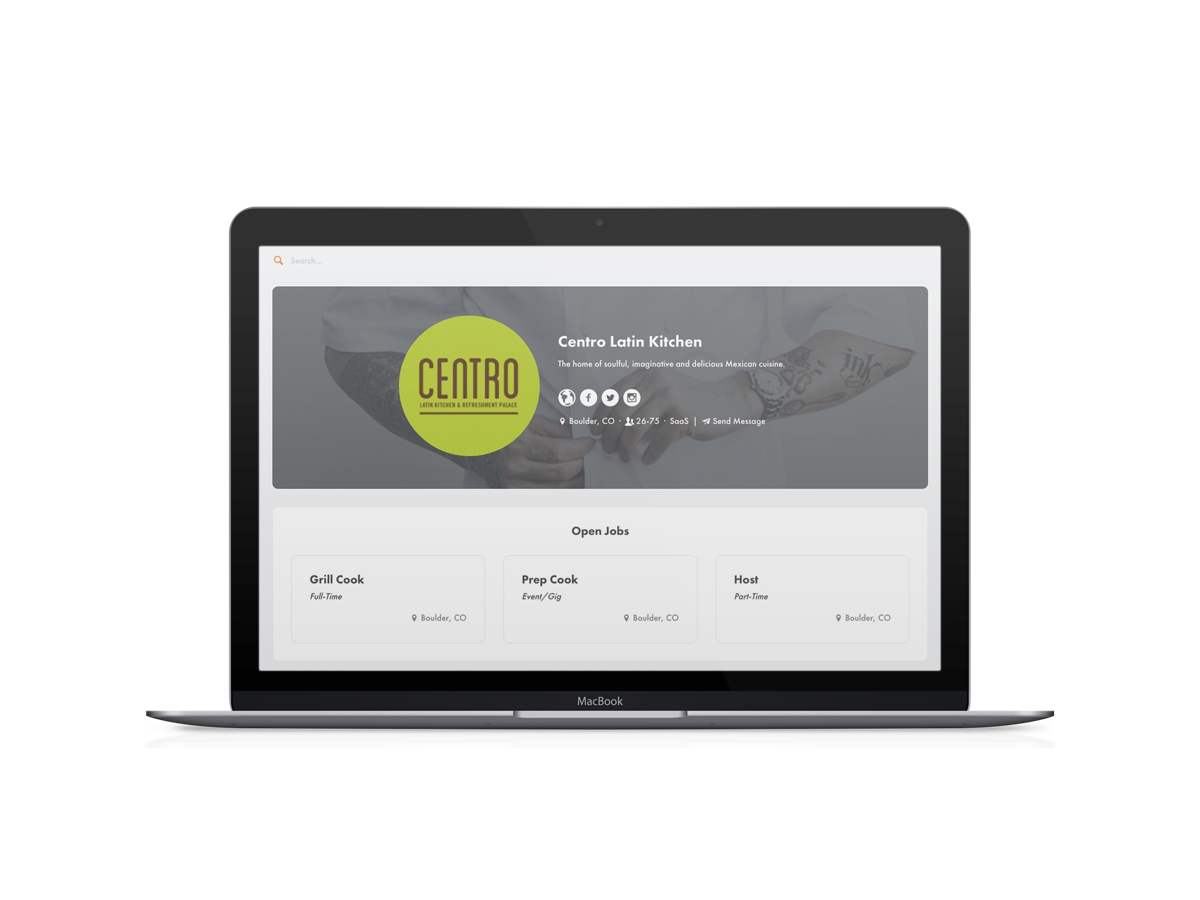
Businesses on Sirvo have business pages where information and current openings are listed. A business’s page is essentially their hosted careers site; the page, as well as the job listings, are accessible to the public, so both users and non-users can discover open positions.
This helps companies increase their reach to job seekers. Businesses can easily advertise their open jobs on the web and social media by sharing their page’s link, and professionals can click on a job to get more information. This means businesses don’t have to worry about their jobs getting buried under an ever-growing list of more recent postings.
Multi-Location and Multi-Admin Functionality
Once a business page is created, the owner can invite additional administrators to help manage the page. Admins can do everything that the owner can besides grant admin privileges. This includes publishing and archiving job listings, reviewing applications, using the applicant tracking system, and messaging. So, whether hiring is done collaboratively or by expertise, it can be a team effort with Sirvo.
Sirvo allows users to create multiple business pages, which is ideal for businesses with several locations. By simply creating a page for each location, businesses are able to delegate hiring responsibilities, post jobs according to location, and give job seekers easy access to location information.
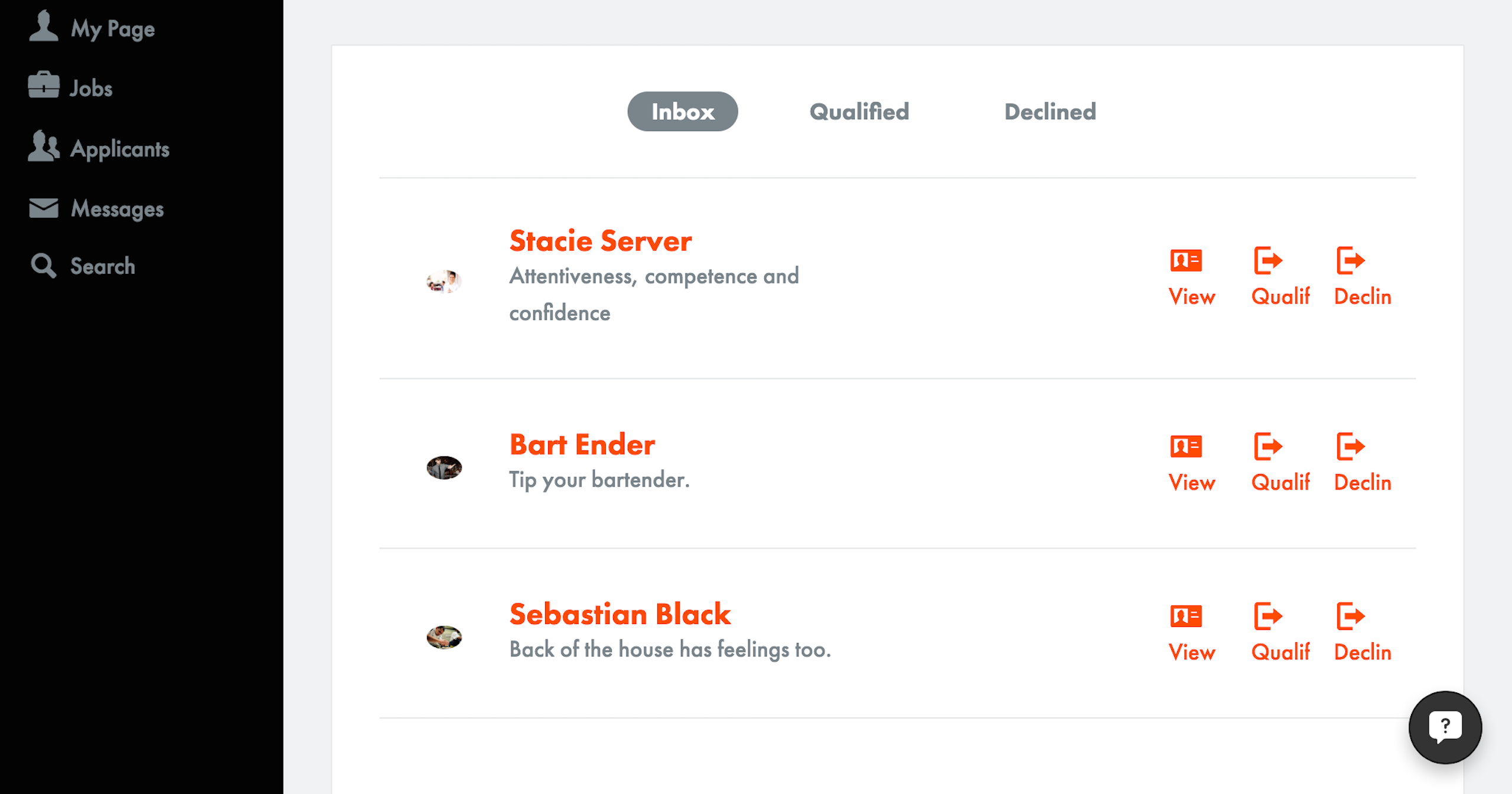
Applicant Tracking System
The application process, from applying to reviewing applications, is hassle-free on Sirvo. Job seekers apply in-app with professional profiles that include photos, work history, skills, and interests. Once submitted, applications are delivered straight to the applicant tracking system inbox and sorted by job listing, keeping them organized. Page admins can then review applications and sort candidates based on whether or not they’re in the running.
The ATS not only helps businesses manage applications but also makes it easy to hone in on the most qualified candidates so that when it’s time to make the call on who to hire, there’s confidence that it’s the right choice.
Messaging
Sirvo also provides a messaging hub to centralize communication. Each business page has its own message inbox accessible by all page admins from which messages can be sent and received. This gives employers and job seekers an easy way to get in touch with each other, whether it’s an invitation to interview or a question about a job listing while keeping everyone on the hiring team in the loop.
Added benefits of joining Sirvo
At Sirvo, we know that an easier hiring process is only half the battle. Businesses that are hiring also need to engage job seekers on a broader level. That’s why we send out our e-newsletters advertising your open positions, continually share your openings across our social channels and even post jobs to Craiglist at no additional cost to you!
Register your business today to access all of our great features free for a limited time! Offer expires 02/10/2016
“We have had success with applicants that have applied for all of our positions. Since Sirvo is new and hip I feel like it attracts people that are more on brand with our company than other staffing services available.” – Paulina Szafranski, Lotus Concepts
As a business owner or manager, it’s your job to make sure your customers have positive experiences when they encounter any issues with your company. Whether you run a restaurant, hotel, or software company, you can, and should, provide amazing customer service that will keep customers coming back. To do that, you need to make sure amazing customer service is a top priority.
The importance of customer service
Many believe customer service is hard to quantify because it depends on relationships. That’s actually not the case. The quality of your customer service is directly connected to your company’s bottom-line.
If you have great service, customers are more likely to continue using your company’s services, even if they have to pay more.
In the end, great customer service can differentiate you from competitors, help you retain customers, and encourage customers to pay premium for your offerings. Plus, if you run a restaurant, customer service ties into the sorts of reviews you get on sites like Yelp, as well.
The breakdown of customer service
No matter the business or team within the business, customer service is made up of the same components: the processes you have in place, the tone you use with customers, the content you provide to help customers, and the measurement of how well you’re doing. Let’s take a look at each.
Utilize processes
Even if you have the best intentions, disorganization ruins customer service. Thankfully, it doesn’t have to. This is where processes come into the picture.
When managing employees and delegating responsibilities that relate to customer service, you need to have processes in play so that your team knows exactly how to interact with customers and handle problems should they arrise. This includes specifying who is responsible for each task, how your staff is held accountable for their duties, the chain of command, and how to proceed when customer service issues come up.
For example, if I’m managing a restaurant’s service staff, I would have a clearly defined process for set-up, service, and take-down, as well as for problem situations. This way, everyone is on the same page about what they’re doing and how to treat customers and their complaints should they have any.
Don’t forget tone
No matter how clear your customer service processes are and how closely they’re followed, if an innapropriate tone (irritated, nonchalant, angry) is used with a customer, nothing else will matter because tone is heard before the actual words. So much so that sometimes it’s the subtleties that make the big difference.
For example, the following two messages say exactly the same thing, but vary greatly in how they come across:
Tone 1: Dear Sir, thank you for your inquiry. You will receive a message from us shortly.
Tone 2: Yo. Yeah sure. We’ll hit you up.
The latter may not go over so well if the call was in regards to setting up a reservation at a restaurant. The customers are likely to go elsewhere because, from the tone, they pervieced there would be no follow up.
Instruct your staff on how to speak to different types of customers and in varying situations. This will ensure that the message is being heard as it should.
Measure success with sentiment
Customer service isn’t any good if you’re not measuring it. You need to know whether or not it’s working, and if it isn’t, what needs to change. This can only be done with feedback. At all times, you need to be checking in to make sure that your staff is performing well and that your customers are happy with the service they’re getting.
There are a number of ways you can do this:
Speak to customers while they’re in house. Walking around tables and asking how everything is going can be a good starting point.
Collect customer surveys using survey cards or by way of a digital platfrom such as Survey Monkey. To increase response rate, try including an incentive for giving feedback.
Look to Yelp reviews, Google reviews, Angie’s List reviews, and other review sites.
Amazing customer service can make all the difference. Great service is about a lot more than business– it’s about fostering relationships with your customers that are long-lasting and mutually beneficial. As a leader within the business, it’s your job to make sure your company is doing all it can to provides experiences that delights your customers, exceeding their expectations with every interaction.