No Results Found
The page you requested could not be found. Try refining your search, or use the navigation above to locate the post.


Whether it’s your first time interviewing for a server job or you’re a seasoned veteran in the industry, you have to be ready for whatever they may throw at you. From how to present yourself to demonstrating your skills, here are some tips to help you dominate the interview.
For me, approaching the interview like you’d approach your tables is the best way to express your qualities and personality.
Your interviewer is looking to see who you are when you’re at a table and what better way to show this than by treating them as you would treat a guest.
Serving is all about confidence. Guests can tell from a mile away if you’re comfortable with what you’re doing or if you’re nervous as hell, and so can your interviewer.
It’s crucial to exude confidence, even if you’re faking it!
So, whether you know everything there is to know about serving or you’re in over your head, it’s crucial to exude confidence, even if you’re faking it! From dominant body language to assertiveness, showing your interviewer that you can keep your cool while being grilled will show them that, if you’re hired, you’ll do the same with your tables.
Positivity is contagious and attractive to a manager as well as a guest. Conveying that you’re happy with what you do and can keep a positive attitude despite the mayhem around you is a crucial element of both serving and interviewing.
So, do your best to keep on smiling even if you’re not totally feeling it.
I try to incorporate this word in every serving interview as a fancier way of saying “guest/customer service”. In the industry, putting the guest first is elemental.
In the industry, putting the guest first is elemental.
Proving that this is important to you will delight your interviewer and reflect well on your priorities as a server. Use this buzzword and give an example of how attentive you can, and will, be.
Establishing trust with customers is goal #1. If you can establish trust right off the bat, guests are more likely to be comfortable asking you questions and following your suggestions. This is good business for the restaurant and, not to mention, you’ll probably get a better tip!
So, it goes without saying, getting your interviewer to trust you goes a long way in demonstrating that you can do the same with customers.
Pro-tip: A great way to gain trust quickly is through your drink recommendation. If you have a suggestion for a drink that you know is universally enjoyed, the guest will likely feed off of your interest and try it. If you describe it correctly and they like it, you’re in. Expressing something like this to your interviewer will show off your know-how and get some extra points!
When interviewing, be sure to articulate how important being both organized and efficient while serving is to you.
While most people believe that serving is a brainless, simple occupation, the amount of multi-tasking involved is far from easy. From drink and food orders to maintaining tables and helping out co-workers, there is a lot on your plate.
Describe your go-to strategy for staying organized and on-task while on the job.
Establishing that you can handle the multitudes of responsibilities and can manage your time efficiently is a sure-fire way to impress a manager and interviewer. To do so, describe your go-to strategy for staying organized and on-task while on the job.
In the industry, we call it being in the weeds. You’re dealing with a fussy customer, trying to find a manager to comp a bill, thinking about the fight you’re having with your roommates; what do you do?
Freak out and cry in the corner or keep your head and breathe? The latter, obviously.
A simple way to impress your interviewer is to be aware of this and express how you would deal with the stress. Servers are ubiquitously known as prima donnas and have trouble keeping their emotions in check. If you show that you can keep your cool, you are on your way to getting a job.
The interview is half the battle to becoming a great server. Use these tips to nail it every time and the rest of our serving hacks for when you get hired!
The page you requested could not be found. Try refining your search, or use the navigation above to locate the post.

Tipping has recently become a topic of much dispute. Over the last few years, a new trend has emerged for compensating service staff: replacing tips with higher hourly wages. While establishments, mainly restaurants, opting for this model believe that this transition will solve a number of issues within the industry, others are not so sure.
So, we’re giving you the facts from both sides of the coin (pun intended) so you can decide for yourself.
1. Income Inequality.
Tipping creates a wage gap between front of house (servers, bartenders) and back of the house (line cooks, chefs, dishwashers). By tipping your front of house staff, you are only compensating the people who take you order and deliver your food, not those who actually prepare it. If everyone was compensated by hourly pay, there would be less of a discrepancy in pay between the two, making it far fairer.
2. Everywhere else is raising minimum wage and servers are suffering.
The recent increase in national minimum wage standards is offering more money to retail and fast food industries but is not being translated to tipping-based restaurants. Servers are not being compensated equally to the other industries and their average pay is dropping below others.
3. Tipping costs the customer more.
On top of a $100 check, you are ‘obligated’ to add $20 for gratuity. This 20% increase on all food ordered at a restaurant ends up costing the customer more than it should. Some restaurants are compensating for this by increasing menu prices to be allocated to servers and bartenders in place of gratuity. In all, raising menu prices and abolishing gratuity is a fairer allocation of wages and can increase a server’s average pay.
4. Tipping is discriminatory.
Whether we want to admit it or not, we all have our biases. Studies show that people are more likely to tip higher if their server is attractive and/or the opposite gender as the customer. This reality also creates a discrepancy between servers and overall unequal tipping standard.
5. Tipping well excuses sexual harassment.
In the restaurant industry the server is put in an uncomfortable position to be kind and attentive in their guests in order to help boost their tips. This becomes a real issue when people use their money as a means of mistreating servers. Some people believe that if they compensate for their actions with money it rationalizes inappropriate behavior. Servers are then put in an uncomfortable position where they must choose between making good money and being objectified by their customers.
6. Most people don’t understand tipping.
Tipping is an odd mix of obligation and reward. People should want to tip their server or bartender but given the choice, without the social obligation, it seems reasonable to believe that most people wouldn’t do it. The 20% rule is a social standard lost in translation. The fact that tipping is driven by social pressure and not eagerness to repay someone for their attentiveness or entertainment value proves that it should be standardized by a higher hourly pay as opposed to an unwritten rule to live by.
Danny Meyer serves as a great example of the new trend away from tipping. He is at the forefront of this transition. Meyer, owner of Union Square Hospitality Group, recently introduced a no-tipping policy in his restaurants. His argument for doing this was to highlight the kitchen staff and bridge the gap between front and back of the house. By raising menu prices 25%, he aims to offer a fairer wage to his entire staff. Many of his peers commend him on this action, fearing that wait staff and guests will be perturbed by this sudden change. On average, he believes, the wage equality and the gratuity-less prices will increase revenue and appease the restaurant as a whole.
As a (biased) server, I have experienced both sides of this issue, having worked at restaurants that use gratuity and those that do not. While there is merit to both sides of the argument, I believe abolishing tipping would ruin the industry.
In most industries, employees are paid based on ability and effort, whether by commission, bonuses, or promotions. So why should the food and beverage industry be any different?
Being a good server or bartender requires extensive training, specialised skills and work ethic. Yes, I know that there are many out there who scoff at this idea, but those people have never run the gauntlet of real service. You must be organized, well-spoken, knowledgeable about menu and drinks, attentive, adaptable…the list goes on and on. As it now stands, the better you are, the more tips you’ll earn. Sure, there will be tables that tip poorly, but it’s a numbers game. More than any other job I’ve worked, the harder you work as a server, the more money you’re going to make, and it’s because of tipping.
Another important element to consider is incentive. It’s not a mystery that your server is kind to you because it’ll make them more money. If this merit-based compensation is stripped, the only incentive to provide quality service becomes not getting fired. It makes it easier for service employees to do just what’s necessary. Going above and beyond has no meaning if there is no reason to do it. It’s a cruel reality, but that’s how it is. No one wants to be bending over backwards for needy guests at 9:00 am on a Sunday morning if they don’t have to. The incentive of making more money for more effort will always trump mediocrity for a higher hourly pay.
The negative impacts of no tipping go beyond the customers, and in fact, cause the entire establishment to suffer. Not only will businesses lose revenue because of lost customers, but also from the lack of upselling. Since servers’ compensation is not based on the check total, there’s just no incentive (there’s that word again). If businesses can’t maintain a steady cash flow, then they can’t afford to pay servers. It’s a vicious cycle that isn’t being taken into account.
This is definitely a complicated issue with pros and cons to both sides. Perhaps there is a place for both models: tipping and increased hourly pay.
When it comes to the dining experience in itself, if your server is good at their job, they will enhance the entire meal with suggestions, entertainment and attentiveness. For example, when it comes to a fine-dining establishment, your server is crucial to the success of your meal and should be compensated accordingly.
At a diner or any turn-and-burn establishment, it makes sense to pay employees with an hourly wage. The varieties of restaurants call for different forms of compensation and this must be taken into account.

It’s the final installment of our kitchen hacks series, so we obviously had finish it off with desserts! Get the sweet tips here.
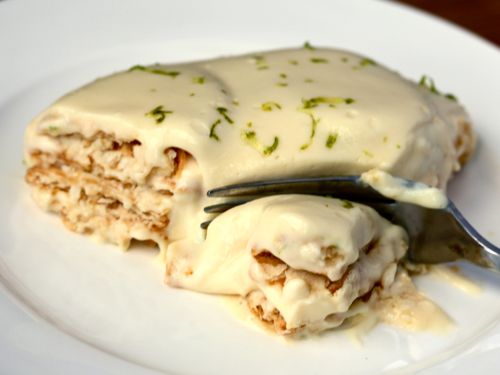
Skip the oven to save time on your next key-lime pie. All you need is heavy cream, sweetened condensed milk, lime, and Ritz crackers. Start by making the custard: combine the heavy cream, condensed milk, and lime juice and stir. Then, pour a layer of the mix into your pie dish (or glass if you prefer), cover it with a layer of crackers, and repeat. Chill the cake until frozen and enjoy.
Don’t have confectioners’ sugar? No need to go to the grocery store because you can make it at home using granulated sugar and a blender or food processor. Add the sugar to your mixing device of choice and set it to ‘pulse’ or ‘blend’ until it has reached a powdery consistency. Sift through a strainer and you’re good to go!

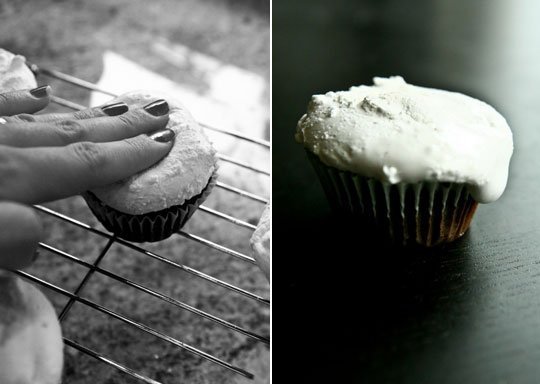
This will save time and earn you creativity points: instead of frosting your cupcakes with frosting, melt marshmallows on top. After your cupcakes are baked, place a marshmallow on top of each, and stick them back in the oven for 3-5 minutes. Remove from the oven and press down gently to create that snow-white cap.
Pro-tip: For a more toasty topping, broil the marshmallow topped cupcakes, but be sure to watch them closely!
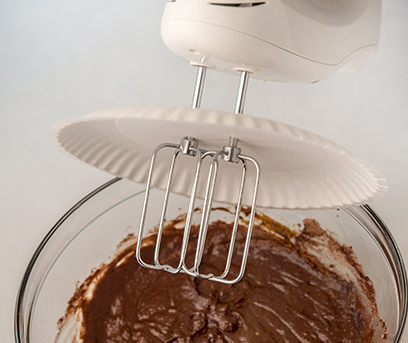
Whether you’re making cake, cookies, or something on the savory side, stop your batter from getting all over the place with a paper plate. Just poke the ends of your mixer’s beaters through the middle of a paper plate before attaching them to the mixer. The plate will act as a shield, keeping your batter where it’s supposed to be.
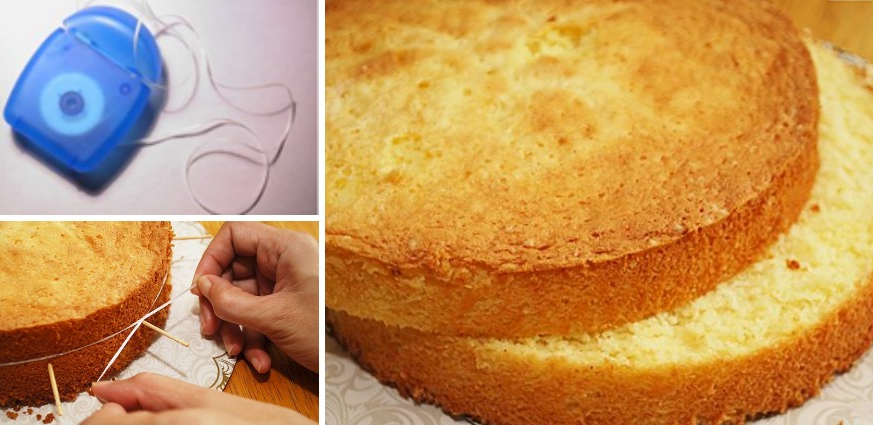
First, make sure you are using waxed, unflavored floss. You don’t want a minty cake! Then, place toothpicks around the cake where you want to slice. Align the dental floss around the row of toothpicks and wrap fully around the cake. Hold the ends with each hand and pull out and away from the cake, so the floss cuts through the cake as the circle of floss tightens. Move the floss slightly from side to side to help the cutting movement. To separate the layers, slide a piece of cardboard or baking sheet with no sides in-between and lift the top layer. And voila!
Pro-tip: For sponge cakes, use a serrated knife to make a few cuts along the toothpicks to give the floss a head start.
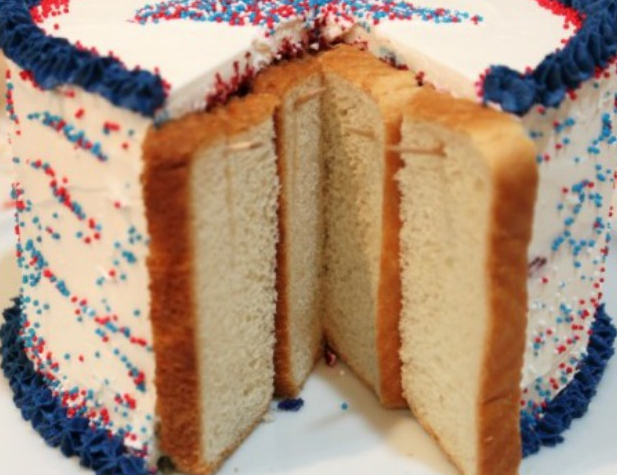
If you’re lucky enough to have leftover cake (especially after reading this), keep it nice and moist with just bread and toothpicks! Cover the cut, un-frosted part of your cake with bread slices and hold them in place with toothpicks, then store in the refrigerator. The bread will get hard and stale, but the cake will stay nice and soft. Sorry, bread—you’re being sacrificed for a greater good.
Get more kitchen hacks here.

It looks like white wine may have gotten a bad health rep for no good reason. White wine lovers – rejoice!
Throughout the years, scientists have documented the benefits of red wine — for heart health, cholesterol control and possibly even cancer prevention. But what about the white kind? The short answer is that the evidence supporting white wine’s health benefits, while still limited, is growing.
While previous studies on the elixir have been mostly focused on testing in animals or on testing the components of the drink itself, two recently published clinical trials found good news for white wine enthusiasts.
The first study, called In Vino Veritas involved tracking 146 subjects half of whom drank pinot noir, and half of whom drank a white chardonnay-pinot over the course of a year. The findings were presented at the European Society of Cardiology meeting last year:
Those who worked out twice per week and drank wine — either kind — saw a significant improvement in cholesterol levels.
The second, published last Monday in the Annals of Internal Medicine, tracked 224 volunteers with type II diabetes who were asked to drink 150 mL of either white wine, red wine or mineral water (the control) with dinner every day for two years. The findings were promising for both red and white wine:
Moderate intake of wine as part of a healthy diet among those with well-controlled diabetes moderately decreases cardiometabolic risk.
Another interesting finding was that sleep quality improved in both wine groups as compared to the mineral water group.
So, for all those white wine enthusiasts who keep hearing that red wine is better for you, stick to your guns because the white stuff may be just as good, if not better when it comes to health benefits.

Last week’s kitchen hacks were all about dairy; this week we’re moving on to the main dish.
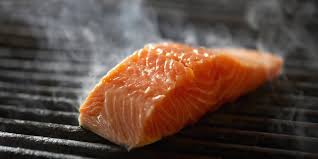
The totally harmless, but wholly unappetizing white gunk that seeps out of salmon filets as they cook is just coagulated protein, also known as albumin. Although there is no way to completely rid the fish of albumin, soaking the fish in a basic brine solution (about 1 tablespoon of salt per cup of water) for just 10 minutes significantly minimizes the amount that collects.
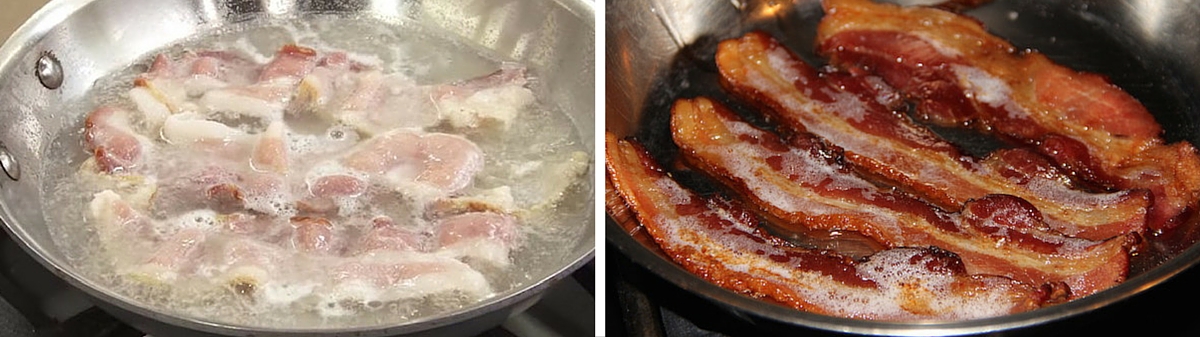
To reduce splatter and, more importantly, minimize the chance of burning your bacon, add just a touch of water. Once the bacon is in the pan, add just enough water to completely coat the bottom of the pan and cook over medium-high heat until the water has evaporated. Reduce the heat to medium and cook the bacon until crisp.
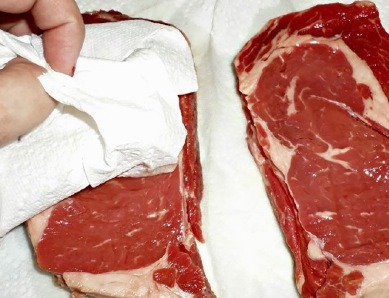
When you’re browning meat, you should blot the surface dry with a paper towel so the meat doesn’t release moisture when it hits the hot oil. Too much moisture makes the meat steam instead of sear, and you will lose that rich brown crust.
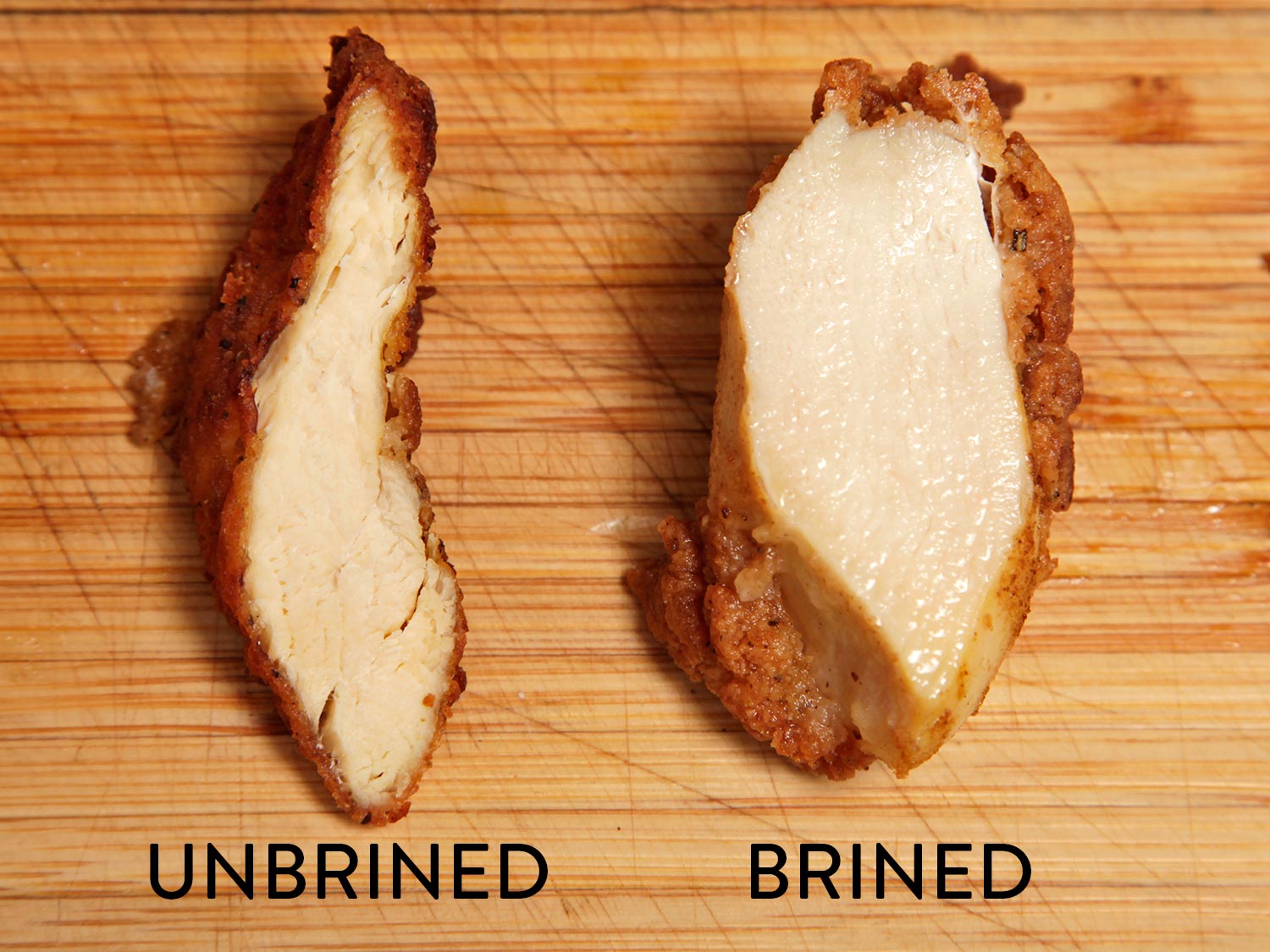
A brinerade is a combination of a brine and marinade. In other words, it’s just a marinade with added salt. The salt is key because it breaks down the meat’s proteins, allowing it to soak up extra water and more of the marinade’s flavor. For an added punch, also add soy sauce to your marinade, but not in place of the salt. Soy sauce will provide an umami flavor, but plays no role in holding moisture.
After you drain pasta, while it’s still hot, grate some fresh Parmesan on top before tossing it with your sauce. This way, the sauce has something to stick to.

For an easy weeknight meal, save and freeze leftover sauces from previous meals in ice cube trays. The cubes can be reheated in a sauté pan when you need a quick sauce.

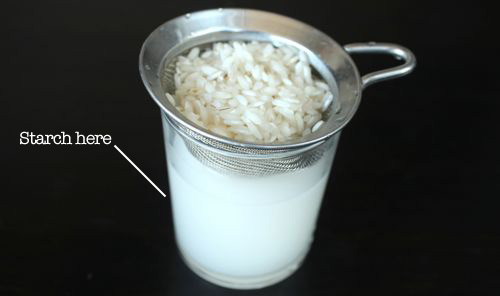
Soaking rice in water before cooking is said to speed up cooking and produce better results. However, in experiments conducted by America’s Test Kitchen, all types of rice that were pre-soaked came out overly tender and mushy.
Instead, try pre-rinsing your rice with several changes of rice. This removes the excess starch on the surface of the grains, which helps them cook up lighter and fluffier.
Next week we’re going from entrées to desserts, so don’t miss out on the sweet tips!
For more tips, click here.